

Related Posts
 Blended Finance Catalysing Financial Inclusion in Uganda
 Unlocking Long-Term Savings: The Role of Technology and Multistakeholder Collaboration in Uganda
 Leveraging Insights from Uganda’s 2023 FinScope Survey for Product Design
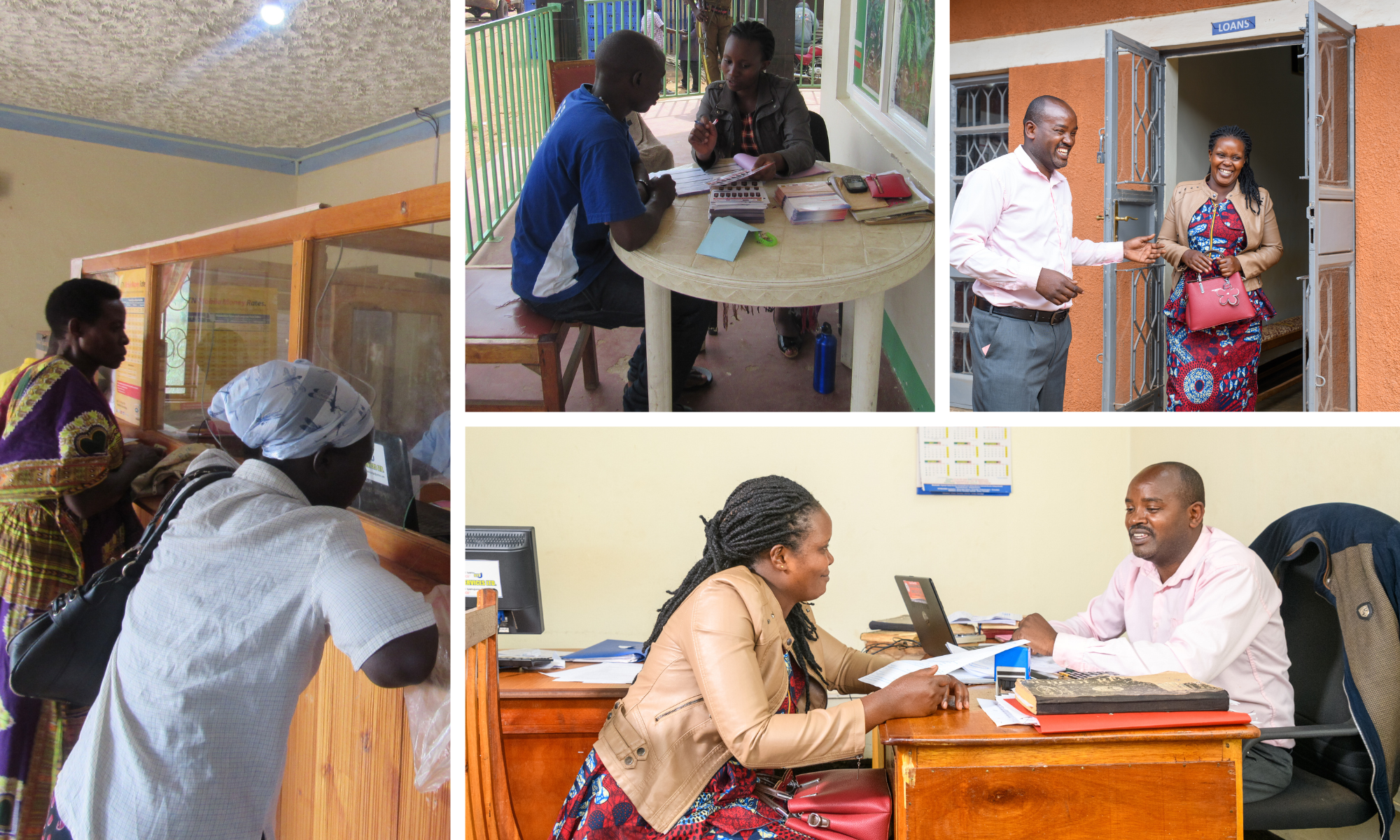 Enhancing financial inclusion beyond alternative credit scoring: Empowering underserved markets
Leveraging Insights from Uganda’s 2023 FinScope Survey for Product Design
Leveraging Insights from Uganda’s 2023 FinScope Survey for Product Design
By Anthea Paelo, PhD
Are Uganda’s financial service providers missing out on untapped potential? Recent data suggests they might be. By leveraging data-driven customer segmentation, these institutions can develop products that meet consumer needs and increase profitability. The recent 2023 FinScope Survey revealed interesting insights about the average financial consumer that should be considered for product development and marketing.
First, most Ugandans are young. Adults between the ages of 18 to 34 years of age form 58% of the population. The 18-24 age segment saw the largest growth between 2018 and 2023. They are the most digitally savvy, have boundless energy and are looking for growth opportunities. Despite this, financial products are typically targeted at those over 24 years of age, neglecting a crucial demographic during a critical stage of their financial development. While they may have limited income currently, they are at a pivotal point in their lives where they have increasing access to opportunities and are most likely to require knowledge and resources to partake in the financial sector effectively and sustainably. There lies an opportunity to develop products that take advantage of this age segment’s digital literacy, limited obligations, and curiosity to increase their financial literacy and introduce them to the formal financial sector.
Second, although 52% of the adult population are women, only 62% of them are formally included compared to 75% of men. This gap represents a significant missed opportunity, especially given studies showing women to be loyal customers and good re-payers. Existing financial products and services rarely consider women’s ability to reach access points given restrictions created by household tasks, their limited access to collateral, or priorities in terms of household care duties. Financial providers have an opportunity to tap into increased revenues by creating products and services that consider the specific barriers that women encounter when trying to access financial services, including lack of collateral and limited ability to travel to far-off access points.
Third, most Ugandans are employed in the informal economy, engaged in trading or providing services like hairdressing, boda-bodas (motorcycle transport), etc. More of them are beginning to keep track of their money and aspire to own farms, land, or grow their businesses. How can we design products and services that meet both their current needs as well as their aspirations? For instance, Musa, a 23-year-old boda-boda rider at a popular Wandegeya stage, could benefit from products that allow him to save for his brother’s school fees, build a credit history, and eventually secure a loan for a house. Financial service providers can design products and services that meet his current needs and support his aspirations, earning a long-term loyal customer with increased financial sophistication.
Fourth, while mobile money has done an excellent job opening the door to formal financial services, with 64% of Ugandans reporting the use of digital transfers, there is still a strong preference for local community savings groups, ekibiina, and an even bigger one for keeping cash at home long-term. Up to 44% of Ugandans who save long-term prefer to do so at home with cash. Part of the reason for this is that they are often intimidated and unsure of the services financial institutions provide. They also seek convenience, financial advice, and clear financial services. However, for microenterprises intending to grow, savings groups can only help so much. They are designed more for social purposes and not to help social enterprises or businesses. There is limited access to credit, and many are vulnerable to poor leadership and theft. More established financial service providers have a role in identifying the gaps in their current service provision and tailoring their products accordingly.
In conclusion, while the role of deeper financial inclusion involves regulators and policymakers, financial institutions can seize untapped market opportunities by using research to identify and address the unique needs of different demographic groups. By doing so, you can significantly increase your customer base and profitability.
The insights from the 2023 FinScope Survey highlight the potential for financial service providers to better serve the diverse needs of Uganda’s population. By focusing on youth, women, and those in the informal economy and by addressing the preferences for convenience and personalised relationships, financial institutions can unlock substantial economic value and contribute to broader financial inclusion.
Related Posts
 FinScope Uganda 2023 Survey
Report on Banking and the Status of Financial Inclusion in Uganda
Report on Banking and the Status of Financial Inclusion in Uganda
This report aims to give an overview of the Ugandan banking sector and the potential opportunities that exist to increase the banked population. The information generated by the FinScope Uganda survey, conducted in 2018, provides the basis for this report’s analysis.
Information presented in all tables and figures are obtained from analysis of FinScope 2018 dataset.
Related Posts

Finscope Uganda 2018: Banking & Financial Inclusion Infographics
Finscope Uganda 2018: Banking & Financial Inclusion Infographics


Related Posts

Report on Informal Financial Inclusion in Uganda
Report on Informal Financial Inclusion in Uganda
Efforts to increase formal financial inclusion in Uganda are faced with significant challenges which are both supply and demand side in nature.
Related Posts

Analysis of status of financial inclusion for women and youth in Uganda
Analysis of status of financial inclusion for women and youth in Uganda
Money management, planning and the safe building of assets are core components of a larger set of economic and social skills needed to achieve a sustainable livelihood. In recent years, there has been a growing recognition of the obstacles women and young adults face in developing these abilities. Financial service providers (FSPs), however, are still failing to meet the needs of these sections of society. In the process, they are missing out on the potential benefits of developing the female and young adult economy.
Related Posts

Finscope Uganda 2018: Informal Financial Inclusion Infographics
Finscope Uganda 2018: Informal Financial Inclusion Infographics


Related Posts

Finscope Uganda 2018: Gender and Financial Inclusion Infographics
Finscope Uganda 2018: Gender and Financial Inclusion Infographics


Related Posts

FinScope Uganda 2018 Survey Report
FinScope Uganda 2018 Survey Report
The FinScope 2018 survey was designed to determine how individuals 16 years or older (i.e. adults) manage their money, the extent to which they use financial services to do so, and to monitor the changes in levels of financial inclusion over time.
Related Posts

FinScope Uganda 2013 Survey Report
FinScope Uganda 2013 Survey Report
To date, FinScope surveys have been carried out in 18 African countries including Uganda. FinScope III survey for Uganda follows two previous-FinScope I and II surveys carried out in 2006 and 2009 respectively.
