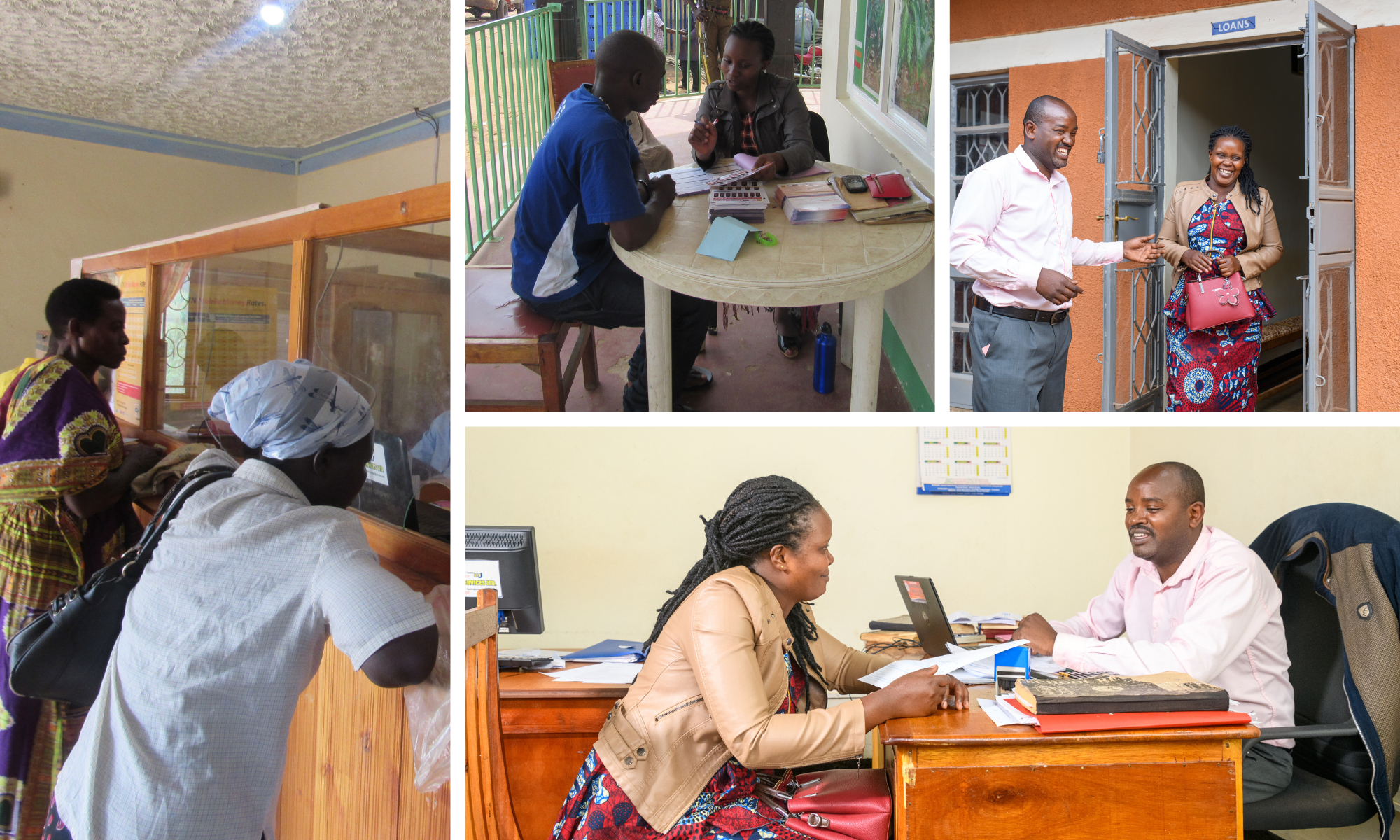
Financial Inclusion Week 2017 – FSD Uganda Symposium on Financial Inclusion

Financial Inclusion Week 2017 – FSD Uganda Symposium on Financial Inclusion

On October 30, 2017, as part of Financial inclusion week running from 30 October to 3 November 2017, FSDU held its first Symposium on Financial Inclusion at the Kampala Serena Hotel. The Symposium was a success attracting over 150 high profile stakeholders from the financial sector in Uganda. The theme for this year’s global financial inclusion week, was “New Products, New Partnerships and New Potential”.

0 Comments
Share:

Low-cost private schools; the untapped gold mine for financial institutions

Low-cost private schools; the untapped gold mine for financial institutions

The concept of the missing middle and needs of SMEs goes beyond access to finance. There is need for support in governance, business development and mentorship.

To take this forward financial institution have been challenged to innovate financial products for affordable private schools which experts say have a huge but untapped revenue growth potential for lenders.

0 Comments
Share:

Uganda’s rural households will be energy deprived unless swift action is taken

Uganda’s rural households will be energy deprived unless swift action is taken

A new report by the Bill & Melinda Gates Foundation warns that the 2013 Sustainable Development Goals (SDG) targets will not be achieved based on the current course of action by world leaders. One of the SDG goals is achieving 100% access to the electrical grid.

0 Comments
Share:

Why collaboration and not competition, is key in improving financial services industry in Uganda

Why collaboration and not competition, is key in improving financial services industry in Uganda

The financial services industry – banks, mobile network operators, insurance providers and others – have historically sought to work independently in achieving their profitability goals. With the recent global and regional influx of Fintechs – companies that leverage technology and innovation to compete in the financial services marketplace – this industry is getting significantly more competitive. Working collaboratively with fintechs, these bigger and more traditional financial services providers stand to improve their ability to respond to established and emerging challenges to growing their customer numbers and improving their bottomline performance.

0 Comments
Share:

Consumer Protection: Is your Money Safe?

Consumer Protection: Is your Money Safe?

By Joseph Lutwama
Former Policy, Legal and Regulatory Specialist, Current FSD Uganda Director of Programs

Can my money ever be safe? Can I trust the bank to keep my money safe? I am sure at some point in your life you have asked yourself these questions when deciding where to keep your money. Five out of every ten adult Ugandans keep their money at home in a “safe place”. Only 5 out of 100 adult Ugandans actually keep their money in a commercial bank.

0 Comments
Share:

Launch of Fintech Association a milestone for Uganda’s financial inclusion agenda

Launch of Fintech Association a milestone for Uganda’s financial inclusion agenda

FinTech Association of Uganda in partnership with Financial Sector Deepening Uganda (FSDU) launched the FinTech Association of Uganda at the Sheraton Kampala Hotel on August 31, 2017.

The emergence and increasing dominance of mobile money in Uganda has resulted in the development of digital financial services. Though still at infancy, digital financial services present immense opportunities for financial inclusion. FinTech activities go beyond mobile money aggregation services to include broader technology solutions that can deliver affordable and high quality financial products and services. Whereas FinTech has revolutionised the financial sector in developed markets, it is only beginning to take root in emerging markets. In Africa, it is also beginning to gain traction, starting with South Africa, Nigeria, Egypt, Kenya and now Uganda.

2 Comments
Share:

The case of Mobile Money innovation in Uganda

The case of Mobile Money innovation in Uganda

Undeniably, a lot has been said as well as written about mobile money. However, it seems there is still some unfinished business related to the topic of mobile money. This unfinished business explains why there is still an ongoing debate about the effect of mobile money on an economy, in this case the economy of Uganda. I found this debate a very intriguing one and I got tempted to contribute to it, particularly from the perspective of inclusiveness and poverty reduction. I would like to rebuff the line of thinking that mobile money has adverse effects on the economy and instead reiterate the counter argument that mobile money has already been playing significant roles, which are quite relevant in the quest for economic transformation and mass poverty reduction.

0 Comments
Share:

Trade, Poverty and Pencils

Trade, Poverty and Pencils

At the time of writing this piece, 13 July 2017, the Great Lakes Summit will be taking place in Munyonyo for two days. According to the website, Kampala will play host to a gathering of politicians, businesses and pro-market advocates from Europe, East Africa and beyond. The summit will explore the vast opportunities for greater trade and investment in the region: and make the ethical case for free trade as a means for poverty alleviation, conflict resolution and social justice”

0 Comments
Share:

The 2017/18 Budget: The Financial Inclusion Challenge

The 2017/18 Budget: The Financial Inclusion Challenge

Once again it is that time of year when the country takes stock of the performance of the preceding year. This year is no different. As I write this article, it is just two days away from the budget speech. Having read through the background to the budget, I have a few thoughts to pen down on the implications of the current budget and future economic projections on financial inclusion. Before we dive into the details the article we need to first unpack this term financial inclusion if we are to do justice to this discourse.

0 Comments
Share:

THE MOBILE DEBT TRAP: The Lion waiting to Pounce on its Prey

THE MOBILE DEBT TRAP: The Lion waiting to Pounce on its Prey

Mukasa is a small holder farmer in Luwero, a district in Central Uganda. Mucks and his family of 7 live off his one acre maize farm. He is a subsistence farmer who mainly grows maize to feed his household. Out of the 20 sacks of maize harvested from his farm, Mukasa only sells 2 sacks at the local market. From these two sacks, He gets an average income of UGX 120,000 (US$ 35) per month.However, Mukasa does not have a regular and stable income due to the uncertainties associated with subsistence agriculture.

0 Comments
Share:

Customer Satisfaction and Needs Assessment on Uganda’s Insurance Sector

Customer Satisfaction and Needs Assessment on Uganda’s Insurance Sector

    Download Report

    This survey was commissioned by the Financial Sector Deepening Uganda (FSDU) on behalf of Uganda Insurers Association (UIA). The survey was implemented by Ipso was conducted within the major towns of the four regions of Uganda.

    2 Comments
    Share:

    Bitcoin: What you need to know

    Bitcoin: What you need to know

    For the last few months I’ve attended several conferences discussing various aspects of the financial services sector from product innovation to financial inclusion. The one thing that has carried over from country to country and topic to topic is the inevitable moment when the coolest person in the room will mention that they’re currently reading up on the next big thing. Bitcoin and Blockchain. This technology is going to change everything. It will upturn business models and the internet will finally be leveraged for change and life will be all rainbows and ice-cream-gluten free at that.

    1 Comment
    Share:

    The tip of Uganda’s data iceberg

    The tip of Uganda’s data iceberg

    Faith owns a small fruit-selling business in Uganda. Like most small business owners in Uganda, Faith started her enterprise with her own income and lacks access to finance to grow beyond the few fruit stalls she owns. She doesn’t keep full financial records and lives most of herlife informally and in cash, but has started using mobile money to make payments to the truck driver that delivers the fruit to the market and to receive payments from her customers. Faith, like Gimli Roberts from our first blog post, lacks access to financial services that support and improve their livelihoods.

    0 Comments
    Share:

    Opportunities to finance education: Low fee private schools in Uganda

    Opportunities to finance education: Low fee private schools in Uganda

      Download Report

      CapitalPlus Exchange (CapPlus) prepared this analysis for financial institutions in Kampala to provide insights on the market opportunity represented by low-fee private schools.

      2 Comments
      Share:

      Agency Banking in Uganda An Assessment of the Potential Challenges and Opportunities

      Agency Banking in Uganda An Assessment of the Potential Challenges and Opportunities

        Download Presentation

        FSD Uganda is an independent, not for profit company. We support innovation, conduct research and help promote and improve policy, laws and regulation that shape the financial sector.

        0 Comments
        Share:

        Quick! Let’s Triple The Number Of Bank Accounts In Uganda

        Quick! Let’s Triple The Number Of Bank Accounts In Uganda

        I had a call from the village on Monday. I needed to make a deposit into the farm manager’s account urgently in order to allow him pay the vet. It was 3.45pm, I was busy, and had a packed social evening planned. I just couldn’t make it to my bank (to withdraw the money), then run across to his (to deposit the same) in time.

        0 Comments
        Share:

        Our Donors & Partners

        European Union Logo
        Report a concern anonymously

        FRAUD AND ETHICS HOTLINE

        Subscribe to our PUBLICATIONS

        OUR CONTACTS

        ADDRESS:

        Plot 20B, Kawalya Kaggwa Close, Kololo
        P.O. Box 608, Kampala – Uganda

        TEL: +256 393 231260/2

        © Copyright FSD Uganda 2015 – 2024. All Rights Reserved.