
Leveraging (Alternative) Data To Deliver Efficiencies In Credit Extension
Leveraging (Alternative) Data To Deliver Efficiencies In Credit Extension

FinTech holds great potential for both financial inclusion and economic development in a wider sense. Digital financial solutions have been expanding access and reach to consumers, especially the unbanked and under-banked. They have been significantly lowering the costs of providing financial services, making it possible to serve the base of the pyramid in a more profitable way. Fintechs have also enabled new business models that offer expanded services to customers and continue to generate new revenue streams for financial service providers.
By Peter Kawumi (Former Manager Competitive Strategies)
Increased access to solar energy by rural households and small businesses will drive demand for formal credit in the developing world.
Off-grid solar energy solutions are taking off. For the over 1 billion people living without electricity, the ability to use technology to access cleaner energy over time can be life-transforming. In sub-Saharan Africa, most people lack access to electricity. This limits their opportunities to education, business growth and presents significant health risks. Grid electricity remains an expensive resource for many – especially the rural poor.
The FinScope Survey is often conducted to respond to a lack of information regarding the need for financial services. The study is designed to determine how individuals 16 years or older (i.e. adults) manage their money and the extent to which they use financial services to do so. The study also enhances monitoring changes in levels of financial inclusion over time. The 2018 FinScope survey was conducted in 316 Enumeration Areas, and 3002 adults responded. The weighted FinScope data represents an adult population of 18.6 million Ugandans.
According to Uganda’s National Household Survey 2016-2017, eight out of every 10 Ugandans reside in rural areas, with the majority engaged in agriculture, while those living in urban areas are mostly involved in the trade and service sectors.
The FinScope 2018 survey was designed to determine how individuals 16 years or older (i.e. adults) manage their money, the extent to which they use financial services to do so, and to monitor the changes in levels of financial inclusion over time.
Insight2impact (i2i), FSD Africa and Oxford Policy Management (OPM), together with Financial Sector Deepening Uganda (FSDU) – developed and implemented an online survey that sought to understand the ways in which financial service providers (FSPs) collect, store and use data in Uganda. The responses in the survey span the period from 29 August 2017 to 10 November 2017 and it is specific to Uganda only.
This report is of a study on linkage banking, commissioned by FSD Uganda to enhance understanding of relationships between Savings and Lending Groups (SLGs) and Financial Services Providers (FSPs).
Friends Consult Limited (FCL) was commissioned by Financial Sector Deepening Uganda (FSDU) in collaboration with Bank of Uganda (BoU) to conduct market research on interoperability in mobile financial services in Uganda. Interoperability is defined as the ability for different systems to connect with one another.
The objective of next generation digital financial services workshop is to share experiences from the India Stack to spur discussions on the applicability and opportunities for Uganda. India Stack is a unified software platform that allows governments, businesses, startups and developers to utilize a unique digital Infrastructure to solve India’s problems towards presence-less, paperless, and cashless service delivery.
Bitcoin, Tulip Mania and the need to dwell with knowledge.
As I write this on the 20th of December 2017, 1 Bitcoin (BTC) is worth $ 18,969.33. Exactly one month ago, 1BTC was $ 7,773.30 1. That’s a gain in value of 144% or 5% per day. Even more astounding, it was worth about $1,000 at the start of the year and less than a dollar back in 2011. Suffice to say, you are more than likely to hear everyone talk about this at your Christmas day party.
Agent Accelerator Survey 2016
Customer satisfaction and needs assessment Survey for the insurance industry 2016
Starting Monday 30th October for one week, people all over the world are going to celebrate Financial inclusion. According to Center for Financial Inclusion the focus will be on exploring how new financial products and partnerships are empowering customers. While all of this is going on, I imagine the first question anybody would ask, as I often do, is this: Honestly, why should I care about financial inclusion? Here are 4 reasons why:
By Jacqueline Musiitwa,
Former Executive Director, Financial Sector Deepening Uganda
The poverty level in Uganda is shockingly high. According to the Uganda Bureau of Statistics in the 2016/17 Household Survey, about 27% or 10 million people are poor. Although there are many ways to climb out of poverty, access to and usage of financial inclusion is one of the critical. The Survey also found that about 33% of Ugandans keep money at home or a secret place. That is the most common way people save money. This is followed by Village Savings and Loans Associations at 16%. With such a high number of people excluded from formal financial services, it is hard for them graduate from one income level to another.
On October 30, 2017, as part of Financial inclusion week running from 30 October to 3 November 2017, FSDU held its first Symposium on Financial Inclusion at the Kampala Serena Hotel. The Symposium was a success attracting over 150 high profile stakeholders from the financial sector in Uganda. The theme for this year’s global financial inclusion week, was “New Products, New Partnerships and New Potential”.
 Blended Finance Catalysing Financial Inclusion in Uganda
 Data sets – FinScope Uganda 2023 Survey Dataset
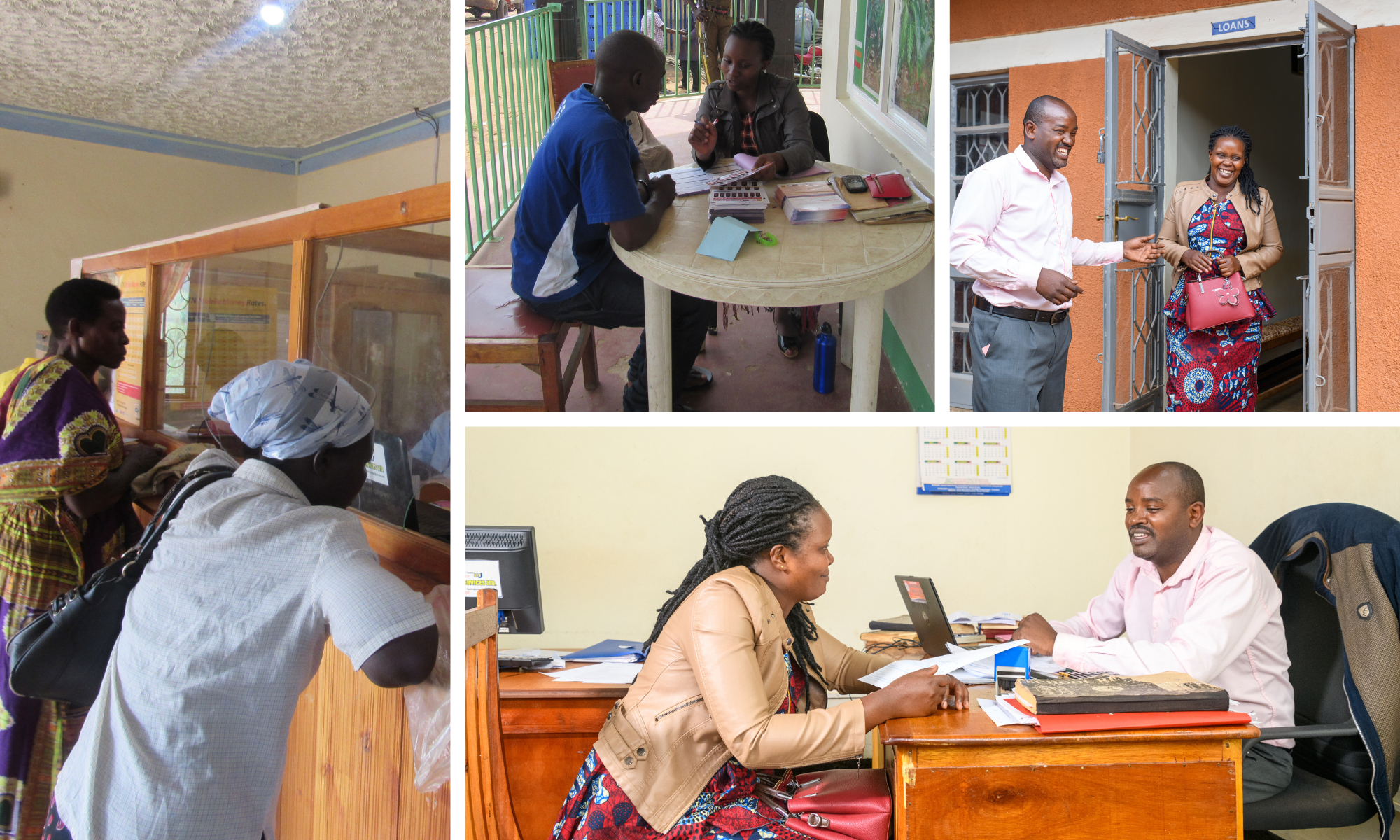 Enhancing financial inclusion beyond alternative credit scoring: Empowering underserved markets
 FinScope Uganda 2023 Survey

 Unlocking Long-Term Savings: The Role of Technology and Multistakeholder Collaboration in Uganda
 Leveraging Insights from Uganda’s 2023 FinScope Survey for Product Design


